Key takeaway
A full kitchen renovation in Manhattan runs $30,000 to $80,000, with most East Village apartment kitchens landing between $38,000 and $55,000. Layout changes that move plumbing add $8,000 to $15,000. Cosmetic refreshes that keep the existing layout start around $18,000. The biggest cost driver is not square footage, it is building type: walk-ups cost more for material carry, co-ops add board approval and insurance costs, and modern condos have higher finish expectations.
Want your actual number instead of a range?
Free on-site estimate. Written, fixed-price quote within 48 hours, or take $250 off.
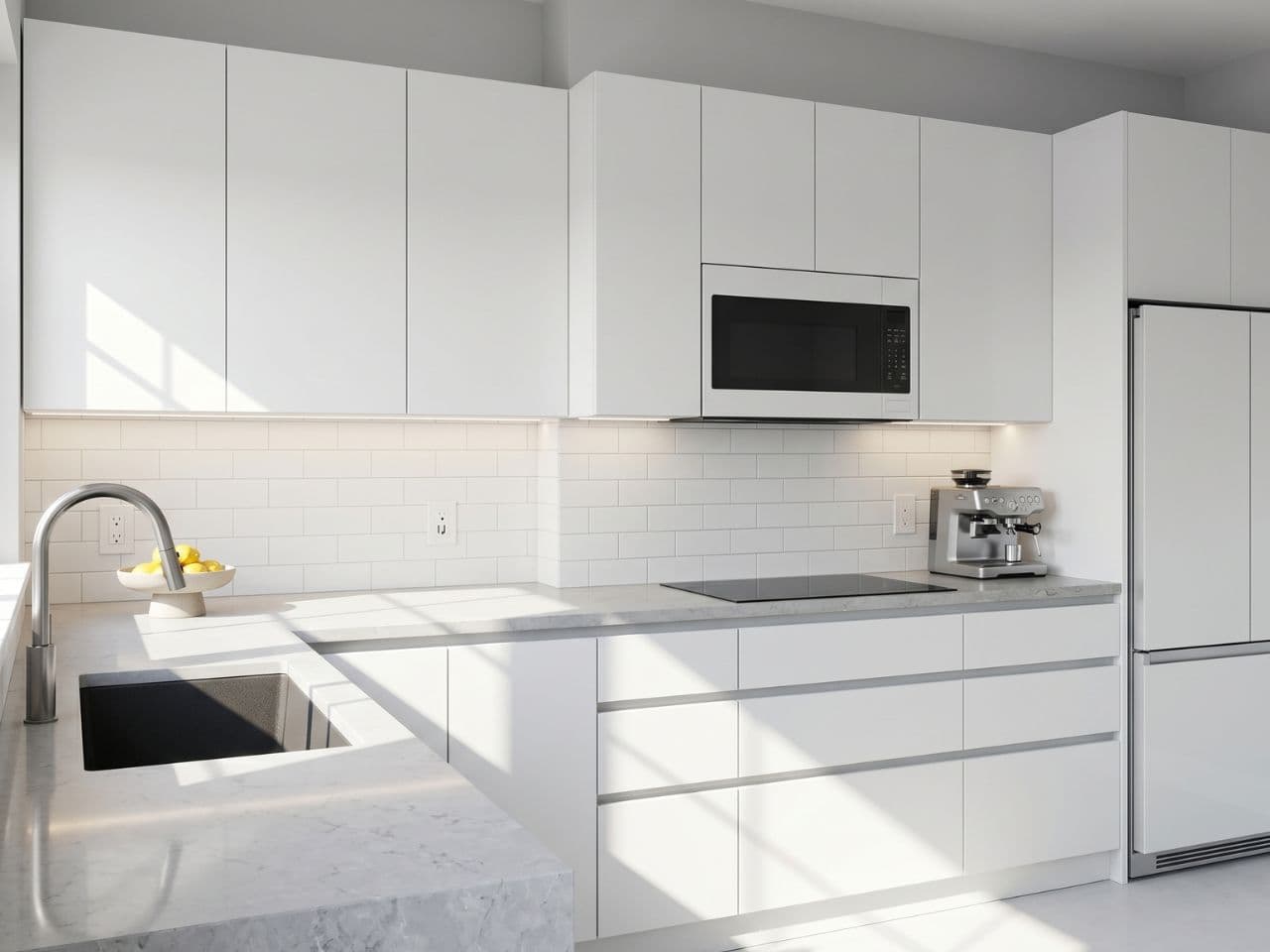
What drives kitchen renovation cost in Manhattan
Most cost guides segment by square footage. In Manhattan, that is the wrong framework. A 70-square-foot galley kitchen in a fifth-floor East Village walk-up costs more per square foot than a 200-square-foot kitchen in a doorman condo with a freight elevator. The variables that actually move the price are building access, board requirements, and whether the plumbing stays put.
A kitchen remodeling involves multiple trades: demolition, framing, plumbing, electrical, drywall, cabinetry, countertops, tile, flooring, and finish work. When these are managed by a single general contractor, the timeline and cost are coordinated. When they are hired separately, the project becomes a second job.
Cost breakdown by building type
These ranges reflect real quotes from completed projects in each building type. Prices include materials, labor, and permits. They do not include appliances, which add $5,000 to $25,000 depending on brand and configuration.
Full kitchen renovation cost by building type (2026)
| Scope | Low | High |
|---|---|---|
| Pre-war walk-up (no elevator) | $42,000 | $65,000 |
| Pre-war co-op (with elevator) | $38,000 | $55,000 |
| Modern condo (doorman, freight elevator) | $35,000 | $50,000 |
| Loft / cast-iron (open plan) | $55,000 | $80,000+ |
| Townhouse / brownstone | $50,000 | $80,000+ |
Pre-war walk-up (no elevator)
$42,000 — $65,000
Pre-war co-op (with elevator)
$38,000 — $55,000
Modern condo (doorman, freight elevator)
$35,000 — $50,000
Loft / cast-iron (open plan)
$55,000 — $80,000+
Townhouse / brownstone
$50,000 — $80,000+
Cosmetic refresh vs. semi-custom vs. full gut
The scope level is the biggest single cost decision. These three tiers cover roughly 90 percent of the kitchen projects we quote.
| Cosmetic refresh | Semi-custom | Full gut | |
|---|---|---|---|
| Price range | $8,000–$18,000 | $22,000–$40,000 | $38,000–$80,000 |
| Plumbing moved? | No | Maybe sink | Any fixture |
| Cabinets | Refaced / painted | New semi-custom | New custom |
| Countertops | Replaced | Replaced | Replaced |
| Timeline | 1–2 weeks | 3–5 weeks | 6–10 weeks |
| Permit required? | Usually not | Sometimes | Yes |
Price range
Cosmetic refresh$8,000–$18,000
Semi-custom$22,000–$40,000
Full gut$38,000–$80,000
Plumbing moved?
Cosmetic refreshNo
Semi-customMaybe sink
Full gutAny fixture
Cabinets
Cosmetic refreshRefaced / painted
Semi-customNew semi-custom
Full gutNew custom
Countertops
Cosmetic refreshReplaced
Semi-customReplaced
Full gutReplaced
Timeline
Cosmetic refresh1–2 weeks
Semi-custom3–5 weeks
Full gut6–10 weeks
Permit required?
Cosmetic refreshUsually not
Semi-customSometimes
Full gutYes
The plumbing relocation cost delta
Moving the kitchen sink is the single most expensive decision in a kitchen renovation. It means opening the floor to relocate drain lines, potentially penetrating the slab, and coordinating with the building for water shutoff to the riser. In a co-op, it also requires board approval because it affects the unit below.
Moving the sink more than three feet from the existing rough-in adds $8,000 to $15,000. Moving a gas line adds $2,500 to $5,000. If your current layout functions, keeping the sink and gas in place is the single most effective way to control cost.
Get your actual number in 48 hours, written and fixed.
Free on-site estimate. Written, fixed-price quote within 48 hours, or take $250 off.
What a quote should itemize
A legitimate kitchen renovation quote is 3 to 5 pages. If you receive a single number on a single page, you are being given an estimate, not a quote, and the final price will be higher. Every line should be separated.
What a proper quote covers
Demo and disposal
Removal of existing cabinets, counters, flooring, and fixtures. Disposal cost, which varies significantly by building access and whether the building has a loading dock.
Rough plumbing and electrical
New supply lines, drain relocation if applicable, new circuits to code, outlet and switch placement, rough-in for under-cabinet and recessed lighting.
Cabinetry and countertops
Cabinet line, door style, finish, hardware allowance. Countertop material, edge profile, backsplash height. All specified by brand and model.
Finish surfaces
Flooring material and square footage. Wall finish (paint grade, tile, or both). Trim, casing, and baseboard. Paint brand and sheen.
Permits, board fees, and soft costs
DOB filing fees, expeditor costs if needed, board alteration agreement fees, certificate of insurance riders. These are real costs and they should be line items, not buried.
Hidden costs specific to NYC
These are the line items that do not appear in national renovation guides and that surprise first-time renovators in Manhattan.
- Freight elevator deposits and scheduling. Most buildings require a refundable deposit ($500 to $2,000) and limit elevator use to weekday business hours. Material delivery and debris removal must fit inside those windows.
- Board alteration agreement fees. Co-op boards charge $250 to $1,500 to review and process your alteration application. This is paid to the building, not to your contractor.
- Certificate of insurance riders. Most co-ops and condos require the contractor to name the building corporation and managing agent as additional insureds. This adds $150 to $400.
- Disposal without a loading dock. Debris must be carried out and placed in a street container during permitted hours. In some neighborhoods, container permits are an additional cost.
- Asbestos and lead testing. Required for pre-war buildings (pre-1960 for lead, pre-1980 for asbestos in joint compound). Testing runs $400 to $800. Abatement, if needed, adds $2,000 to $10,000.
Frequently asked questions
Is it cheaper to renovate a kitchen in a condo or a co-op?
Condos are typically cheaper because there are fewer board requirements, no alteration agreement to file, and fewer insurance riders. Co-op buildings often require board approval, a formal alteration agreement, and a certificate of insurance naming the building as additional insured, which adds time and cost.What is the cheapest way to update a NYC kitchen?
A cosmetic refresh keeping the existing layout: repainting cabinets, replacing countertops and hardware, and adding a new backsplash. This runs $8,000 to $18,000. If the layout works for you, do not move plumbing. Plumbing relocation is typically the single most expensive line item in a kitchen renovation.Do I need a permit to renovate my kitchen in NYC?
If you are replacing cabinets and counters without moving plumbing, gas, or electrical, you generally do not need a DOB permit. If you are relocating the sink, adding or moving gas lines, or changing the electrical layout, you do. Your contractor should file and manage the permit process for you.Why are NYC kitchen renovations more expensive than the national average?
Higher labor rates, building access restrictions (freight elevator scheduling, material carry in walk-ups), co-op and condo board requirements, DOB filing fees, and higher disposal costs in buildings without loading docks. A Manhattan kitchen renovation typically runs 30 to 50 percent more than the same scope in a suburban single-family home.
Free on-site estimate. Fixed-price quote in 48 hours.
No deposit required. Written workmanship guarantee on every job. We answer phones 7 days a week, 7am to 7pm.
★ Miss the 48-hour deadline? Take $250 off your project.