Key takeaway
A bathroom renovation in Manhattan runs $10,000 to $18,000 for a refresh and $30,000 to $45,000 for a full gut that keeps the fixtures on their current wall. Moving fixtures to a new wall adds $8,000 to $15,000. Whether you need the refresh or the gut comes down to three questions about what is behind the tile, not about taste or budget ambition.
Want your actual number instead of a range?
Free on-site estimate. Written, fixed-price quote within 48 hours.
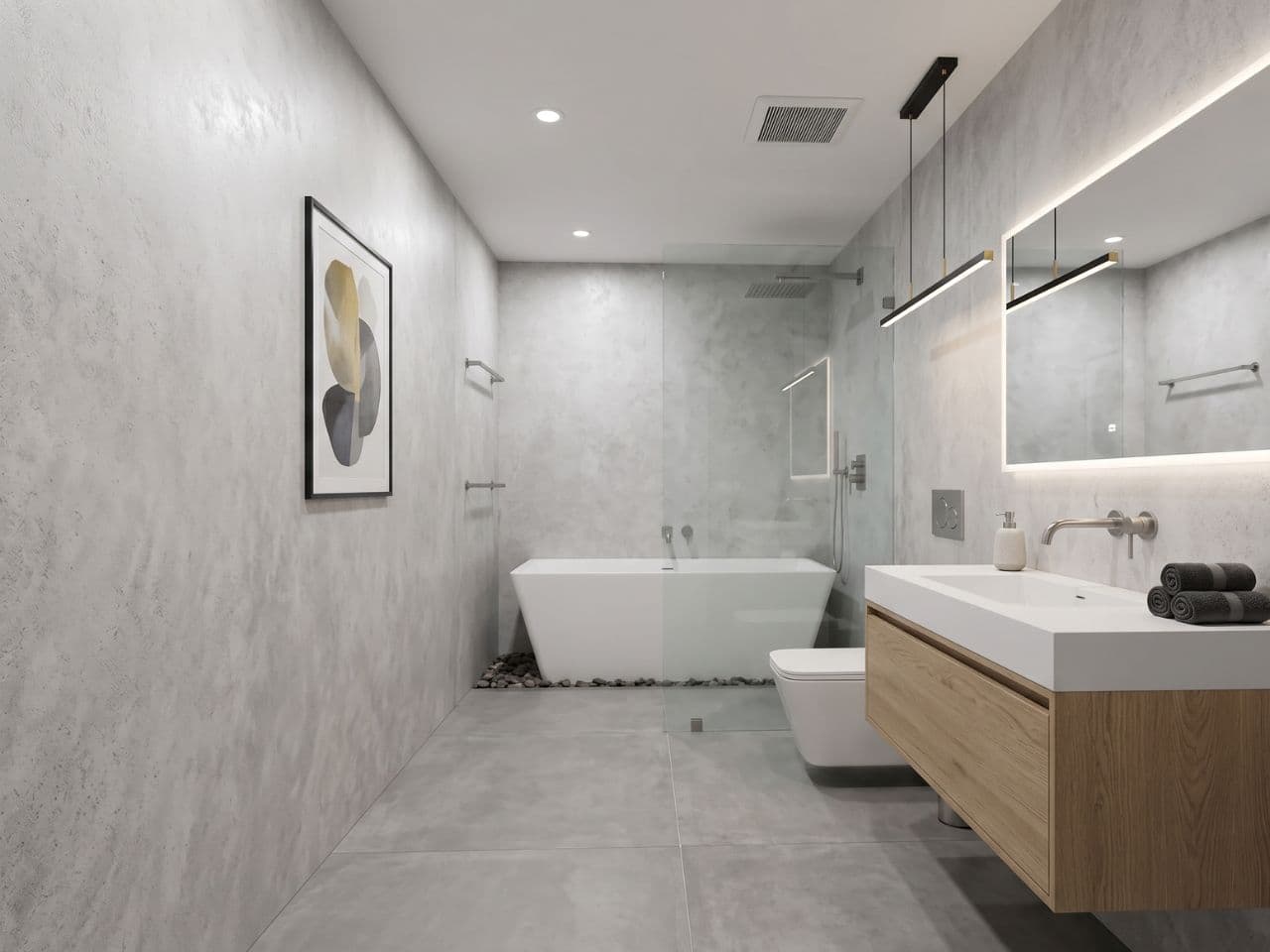
Refresh or gut: which one do you actually need
The price difference between a refresh and a gut is roughly 3x, and a lot of people pay for the gut when the refresh would have done the job. Run the apartment through three questions before you look at a single fixture.
First: does the layout work? If the toilet, sink, and shower are where you would put them anyway, you do not need to move plumbing, and that single fact keeps you out of the top price band. Layout complaints are the number one driver of gut decisions in Manhattan bathrooms, because most pre-war bathrooms were laid out for a tub and nothing else.
Second: is anything leaking, slow, or failing? Water stains on the ceiling below you, a shower pan that flexes, drains that run slow after clearing, or a rusty valve you cannot shut off. Any of those means the problem is behind the tile, and no refresh fixes what is behind tile. That is a gut, or at least a targeted opening of the wet wall.
Third: how old is the plumbing you cannot see? In a pre-war building, assume galvanized supply lines and cast iron drains unless a previous owner replaced them. They have a service life, and the tail end of it tends to arrive two weeks after your new tile goes in if nobody checked. Old paint layers in these buildings also carry lead, and the EPA’s lead-safe renovation rules apply to the dust a bathroom demo creates. A contractor should tell you what they can and cannot verify about your risers before quoting, not after.
What a bathroom renovation costs in NYC, by scope
These are real ranges for Manhattan apartments as of 2026, sized for a typical 40 to 70 square foot bathroom, the size you find in our East Village bathroom projects. They include labor, materials, and general contractor coordination. They exclude board fees and DOB filing, which are covered in our co-op renovation guide. If your scope involves plumbing changes, filing with the NYC Department of Buildings is part of the job, not an optional extra.
Bathroom renovation cost by scope (2026)
| Scope | Low | High |
|---|---|---|
| Cosmetic refresh (reglaze, fixtures, vanity, paint) | $10,000 | $18,000 |
| Full update, fixtures stay in place (all new tile, new tub) | $20,000 | $34,000 |
| Full gut, same layout | $30,000 | $45,000 |
| Full gut, fixtures relocate | $42,000 | $60,000+ |
Cosmetic refresh (reglaze, fixtures, vanity, paint)
$10,000 - $18,000
Full update, fixtures stay in place (all new tile, new tub)
$20,000 - $34,000
Full gut, same layout
$30,000 - $45,000
Full gut, fixtures relocate
$42,000 - $60,000+
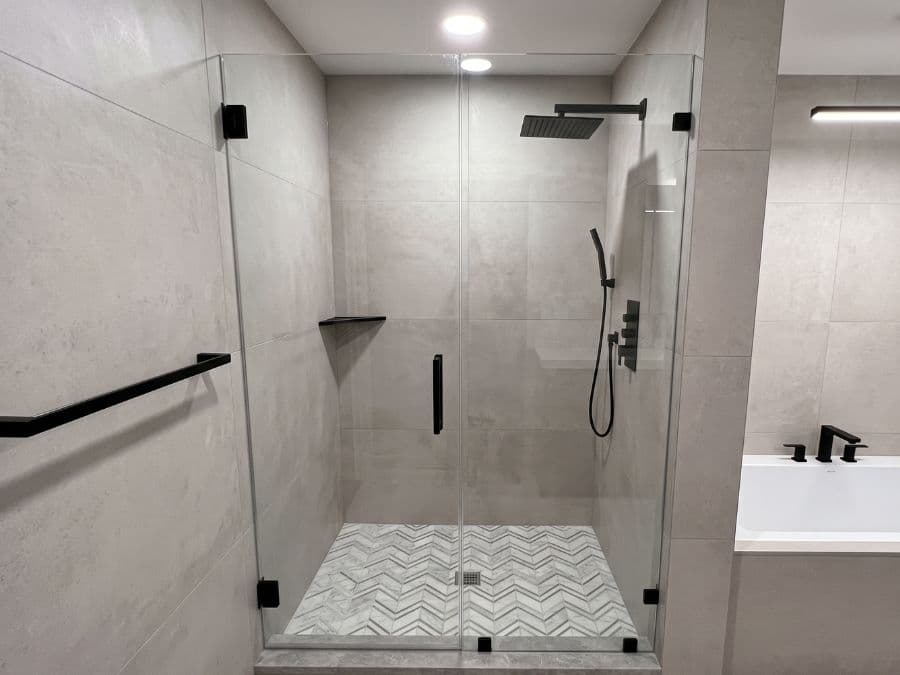
The line items, one by one
A bathroom is a small room where six trades work in sequence in a space the size of a parking spot. Here is what each piece actually runs, so you can see where your money goes instead of staring at a single bottom-line number. The midpoints of these lines sum to the ranges in the table above.
Line-item ranges for a Manhattan bathroom gut (2026)
| Scope | Low | High |
|---|---|---|
| Demolition and disposal | $1,200 | $2,500 |
| Waterproofing (pan, wet walls, flood test) | $1,500 | $3,000 |
| Plumbing in place (valves, traps, supplies) | $2,500 | $5,000 |
| Drain relocation, if fixtures move | $4,000 | $8,000 |
| Tile, labor and material | $4,000 | $10,000 |
| Vanity and countertop | $1,200 | $4,000 |
| Glass enclosure | $1,200 | $2,800 |
| Electrical (GFCI, lighting, exhaust fan) | $800 | $2,000 |
| Paint, silicone, accessories | $600 | $1,200 |
Demolition and disposal
$1,200 - $2,500
Waterproofing (pan, wet walls, flood test)
$1,500 - $3,000
Plumbing in place (valves, traps, supplies)
$2,500 - $5,000
Drain relocation, if fixtures move
$4,000 - $8,000
Tile, labor and material
$4,000 - $10,000
Vanity and countertop
$1,200 - $4,000
Glass enclosure
$1,200 - $2,800
Electrical (GFCI, lighting, exhaust fan)
$800 - $2,000
Paint, silicone, accessories
$600 - $1,200
Tile is the line that moves the most, and it moves for a reason people do not expect: it is not the price per square foot, it is the pattern. A straight stack of 12 by 24 inch tile is fast. A herringbone floor, a niche with a mitered edge, or a schluter strip detail multiplies labor hours on the same square footage. When you compare quotes, make sure the tile line specifies the pattern, not just the material. Our tile work page shows the patterns we install and where each one earns its cost.
The wet wall: why moving fixtures costs so much
The wet wall is the wall that carries your plumbing stacks, the shared risers that run vertically through the building. Your toilet, sink, and shower all connect to it through branch lines. Keeping every fixture on the existing wet wall is the single biggest cost saver available in a bathroom renovation.
Moving a drain even a few feet means opening the floor, cutting into the branch line, re-pitching the new drain so it flows by gravity, and very often opening the ceiling of the apartment below you to access the junction. In a co-op that last part is not optional, it is a building decision, and boards are conservative about anything that touches common plumbing. The co-op approval process exists partly to review exactly this.
There is also a rule worth knowing before you fall in love with a plan: wet-over-dry. Most co-op boards prohibit putting a bathroom over a dry room below, meaning your new bath layout cannot drain into a ceiling that was a bedroom on the floor underneath. If your dream layout breaks that rule, no contractor can talk the board out of it.
Waterproofing: the line item you cannot see
Since it decides whether the job holds up, here is what a proper waterproofing scope includes on a gut:
- A sloped pan under the tile floor, so water travels to the drain instead of pooling against the curb
- Membrane on the wet walls to shower-head height, with corners, curb, and penetrations detailed by hand, not just rolled on flat
- A flood test before any tile is set: the pan is plugged, filled with water, and left to sit so a failed membrane shows up as a water level drop, not as a ceiling stain two years later
Done properly this adds two to three days to the schedule and $1,500 to $3,000 to the price. It is the cheapest insurance in the entire renovation, because the failure mode is water damage in the unit you do not own.
What a fair quote itemizes
A bathroom quote should read like the line-item table above, with a brand and model next to every fixture and a square footage and pattern next to the tile. Two structures deserve suspicion:
The allowance trap. A quote that carries a $2,000 tile allowance is not quoting your bathroom, it is quoting a bathroom. Tile in Manhattan showrooms routinely runs $15 to $40 per square foot before labor, and the difference lands on you as a change order after demo has started. Pick tile before the quote is fixed, or accept that the number will move.
The missing waterproofing line.If waterproofing is folded into “tile labor” with no flood test mentioned, you cannot tell whether it is budgeted at all. Ask. A contractor who waterproofs properly is happy to say so in writing, because it is a differentiator. Our bathroom remodeling quotes list it as its own line every time, and the flood test date appears on the schedule you get before we start.
Fixed-price bathroom quote in 48 hours, in writing.
Free on-site estimate. Written, fixed-price quote within 48 hours.
When you do not need any of this
If the tile is sound, the layout works, and the plumbing is quiet, you may not need a renovation contractor at all. Reglazing a tub and wall tile runs $1,000 to $2,500. A new toilet, vanity, faucet set, mirror, lighting, and paint gets you a room that reads as new for $4,000 to $8,000 all in, and most of that is the kind of work a good handyman service can do without a full renovation crew.
We will tell you if that is your situation, on the first visit, because a refresh customer who trusts you becomes a gut customer in five years, and a gut customer who was sold an unnecessary gut tells the whole building. The same logic applies to kitchen renovation costs: the cheapest project is the one you do not need.
Frequently asked questions
How long does a NYC bathroom renovation take?
A cosmetic refresh takes 1 to 2 weeks. A full gut takes 6 to 10 weeks of construction, plus 2 to 6 weeks before that for board approval in co-ops and DOB filing if plumbing moves. Tile work is the long pole: a fully tiled bathroom with a custom pattern can hold the room for two weeks by itself.Can I renovate a bathroom without a permit in NYC?
Yes, if you are replacing fixtures in place without moving plumbing, gas, or electrical. Swapping a toilet for a toilet at the same location generally needs no DOB filing. Moving the shower, relocating a drain, or adding circuits does require filing, and your contractor should handle it.What is the cheapest bathroom renovation that still looks good?
Reglaze the tub and tile instead of replacing them, swap the toilet and vanity, replace fixtures, and repaint. That package runs $4,000 to $8,000 and changes how the room reads. It does nothing for a failing shower pan or 60-year-old drains, so it is only honest when everything behind the tile is sound.Why is waterproofing so expensive?
Because it is all labor and zero visible result. A proper job means demolishing to studs, a sloped pan, membrane up the wet walls, corners and penetrations detailed by hand, and a flood test before a single tile goes on. It runs $1,500 to $3,000 and it is the line item that decides whether the bathroom is still dry in ten years.Do I need board approval for a bathroom renovation?
In a co-op, yes for anything that opens walls or touches plumbing, because the building owns the risers. Most boards require an alteration agreement, a certificate of insurance, and a scope memo before you book demo. Condos usually require notice and insurance certificates but are lighter on process.
Free on-site estimate. Fixed-price quote in 48 hours.
No deposit required. Written workmanship guarantee on every job. We answer phones 7 days a week, 7am to 7pm.